The Member Who Thinks the Conductor Is God
The devotion becomes particularly entertaining whenever the conductor changes their mind.

Every choir has one. They don't simply admire the Musical Director; they have elevated them to a position somewhere between world-renowned maestro and supreme musical being. In their eyes, the conductor is incapable of error. Every rehearsal comment is treated as profound wisdom, every gesture carries deep meaning, and every change of interpretation is accepted without question. If the conductor says the altos need to sing with "more warmth", they immediately know exactly what that means. If the conductor says the tenors should imagine the sound travelling over a mountain range before landing gently on the audience, they nod thoughtfully as though this is the most obvious thing in the world.
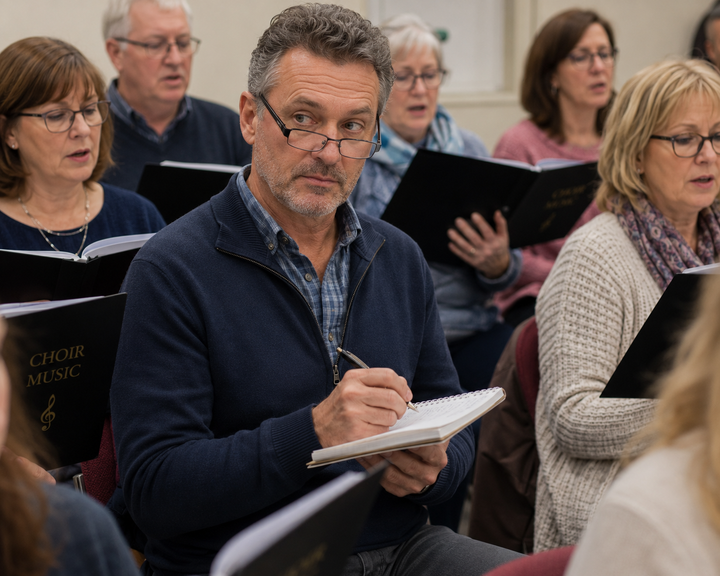
While the rest of the choir occasionally exchanges puzzled glances, this member has already written the conductor's latest pearls of wisdom into the margin of their score in immaculate pencil. They laugh warmly at every joke, even the ones that weren't intended as jokes, and when the conductor asks, "Does that make sense?", they are already nodding before the sentence has finished. They would never dream of asking for clarification because, in their mind, if they don't understand something, the problem clearly lies with them and not with the person standing on the podium.
The devotion becomes particularly entertaining whenever the conductor changes their mind. Last week the rallentando began at bar 72. This week it begins at bar 68. There is no explanation and certainly no acknowledgement that the choir spent the previous month carefully marking the old version. Most singers sigh quietly as they reach for their erasers. Our devoted follower, however, erases the old marking with an almost spiritual sense of fulfilment. The previous instruction has simply served its purpose. Musical revelation has moved on.
They are equally dependable outside rehearsals. Mention the conductor's name in conversation and they instinctively move into defence mode, despite nobody having criticised them. Suggest that perhaps the rehearsal finished a little late and they will explain that true artistry cannot be constrained by the clock. Observe that the tempo seemed slightly faster this week and they will confidently inform you that this was undoubtedly an intentional artistic decision designed to reveal previously hidden emotional depths within the music. The possibility that the conductor simply got carried away never seems to occur to them.
After rehearsal, they somehow find themselves in the conductor's general vicinity without ever appearing to make a conscious effort. They are available to stack chairs, carry music stands, collect forgotten folders or discuss the astonishing beauty of the second verse modulation. None of this feels calculated. It is simply the natural behaviour of someone who wishes to remain close to greatness for as long as possible before returning to ordinary civilian life.
The truth, of course, is that most conductors find this slightly embarrassing. Conductors are generally looking for singers who listen carefully, think independently and engage with the music rather than treating every rehearsal as an opportunity for quiet worship. The healthiest musical relationships are built on trust rather than unquestioning devotion, and the best rehearsals are often those in which singers feel comfortable asking sensible questions or admitting that they don't quite understand what is being asked.
Perhaps that is why the illusion never survives for very long. Even the most accomplished conductor will eventually announce, with complete confidence, "Let's take it from page fourteen," only to discover that the piece has twelve pages. They will enthusiastically begin conducting the wrong verse, forget which ending they intended to use or spend several minutes searching for the baton that has been tucked behind their ear all along. In those moments the myth briefly dissolves, and everyone is reminded that the figure on the podium is, reassuringly, just another musician doing their best.
So, admire your Musical Director. Respect their musicianship, appreciate their commitment and trust their leadership. Just resist the temptation to believe they are musically omniscient. If they really were all-powerful, they would have solved the shortage of tenors years ago.