The Choir's Unofficial Intelligence Service
Every successful choir also contains an entirely unofficial role occupied by a person who appears to possess access to information that should, by any reasonable standard, be unavailable to them.
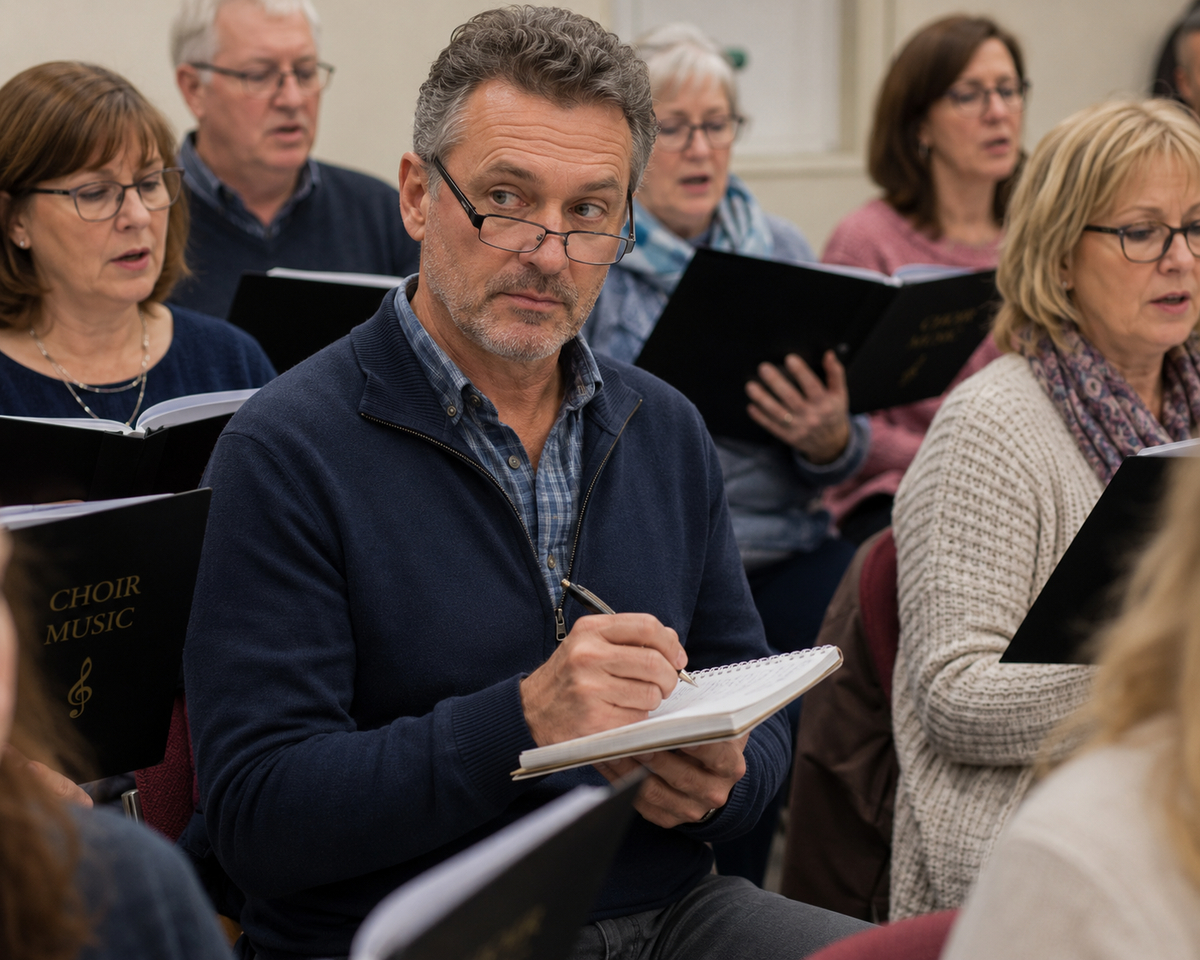
Every choir has one.
Not a Chairperson. Not a Secretary. Not a Musical Director. Those are merely the official positions. Every successful choir also contains an entirely unofficial role occupied by a person who appears to possess access to information that should, by any reasonable standard, be unavailable to them.
This individual knows everything.
They know who is absent before rehearsal begins. They know why they are absent. They know whether the absence is genuine, partially genuine or merely disguised as genuine. They know who is arriving late, who left early last week and who is currently considering joining another choir but has not yet mentioned it to anybody else. If a singer misses a rehearsal due to illness, the Intelligence Officer will not only know about it, but will probably be able to provide a timeline of symptoms.
The truly remarkable aspect of this phenomenon is that nobody can ever identify the source of the information. Choir committees spend considerable time preparing communications. Secretaries circulate updates. Musical Directors make announcements. Yet somehow the Intelligence Officer consistently acquires news before it becomes public knowledge. One begins to suspect that they are operating a sophisticated network of informants spread strategically throughout every voice part.
New members are particularly vulnerable.
Most choirs would regard it as polite to spend a few weeks getting to know a newcomer. The Intelligence Officer prefers a more efficient approach. By the tea break they have established where the individual lives, what they do for a living, whether they have sung in choirs previously and, quite possibly, their preferred supermarket. By the end of the second rehearsal they have formed a view on the person's reliability, musical ability and long-term membership prospects.
The newcomer remains blissfully unaware that a complete background assessment has already taken place.
Nothing escapes their attention. A subtle change in the seating plan generates immediate interest. A quiet conversation between committee members is analysed in forensic detail. The arrival of a new piece of repertoire triggers a series of theories regarding forthcoming concerts, competitions and artistic direction. Most of these theories are entirely speculative, but they are delivered with such confidence that listeners begin to doubt their own understanding of reality.
Particularly gifted Intelligence Officers possess the ability to identify developments before they have actually happened. They may announce that the choir is considering a competition entry, a repertoire change or a committee initiative weeks before any formal discussion has taken place. Occasionally they are wrong, but their success rate is alarmingly high. At times it feels less like gossip and more like a highly specialised form of choral clairvoyance.
The rest of the choir develops a complicated relationship with this individual. Officially, everyone rolls their eyes. Unofficially, everyone relies on them. If you need to know why somebody is absent, ask them. If you need to know whether next season's concert venue has been confirmed, ask them. If you need to know who accidentally brought home the wrong folder after rehearsal, they probably already have three possible suspects and a working theory.
What makes the whole thing especially entertaining is that the Intelligence Officer genuinely believes they are simply being observant. They do not view themselves as a gossip. They see themselves as somebody who pays attention. In fairness, they do pay attention. They pay attention to absolutely everything.
Some people sing during rehearsals. Some people watch the conductor. Some people focus on learning the music.
The Intelligence Officer is quietly monitoring the entire organisation.
It is entirely possible that they know more about the choir than the committee, the Musical Director and the membership secretary combined. If the choir were ever investigated by a major government agency, the authorities would save considerable time by simply interviewing this person first.
And yet, despite possessing near-omniscient knowledge of every development within the organisation, they remain unable to answer one of choir life's most enduring mysteries.
Why, after six years of rehearsals, do certain members still need to ask what page everyone is on?