The Great Pencil Borrowing Economy
The same people lend pencils week after week to the same borrowers, who display no obvious intention of ever acquiring pencils of their own.

Every choir operates an informal economic system that would fascinate academics, confuse accountants and almost certainly collapse under even the most basic audit. At the centre of this system sits one of the most valuable commodities in choral life: the humble pencil.
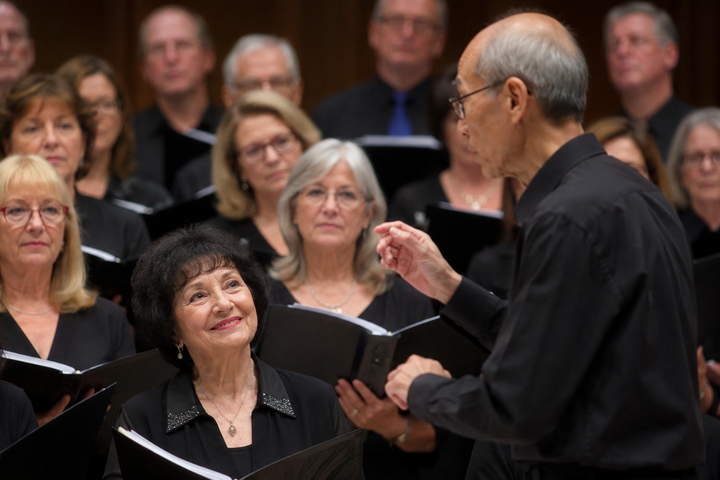
The conductor makes the request. It is a request heard in rehearsal rooms across the world every single week.
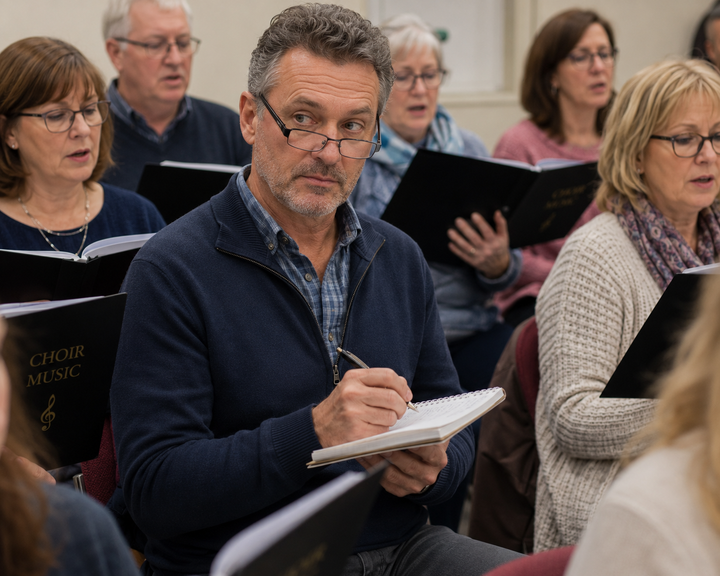
"Could everyone mark that in their score, please?"
What follows is one of the great rituals of amateur music-making.
Approximately one-third of the choir immediately reaches for a pencil. Another third begins searching pockets, bags and folders with increasing urgency. The remaining singers simply turn to the nearest responsible-looking person and utter the phrase that has become the cornerstone of the entire system:
"Could I borrow a pencil?"
This is where things become interesting.
There is, in every choir, a small group of individuals who appear to own all the pencils. Nobody knows how this happened. They are not appointed. They are not elected. Yet somehow they arrive at every rehearsal carrying sufficient writing equipment to open a modest stationery outlet.
These people are the backbone of the pencil economy.
Without them, rehearsals would grind to a halt within minutes.
What makes their contribution even more remarkable is that they receive almost nothing in return. The same people lend pencils week after week to the same borrowers, who display no obvious intention of ever acquiring pencils of their own. One begins to suspect that certain choir members have not personally owned a pencil since secondary school.
The borrowers themselves often display extraordinary confidence. They arrive at rehearsal carrying music, water bottles, reading glasses, travel mugs, snacks and occasionally enough outerwear for an expedition to the Arctic. Yet despite this impressive level of preparation, the possibility that a conductor might ask them to write something down appears to come as a complete surprise.
Many have developed highly refined borrowing techniques.
Some specialise in charm. Others rely on long-established friendships. A few simply hold out an empty hand with such confidence that a pencil materialises almost immediately. Years of practice have transformed the process into an art form.
Of course, every lending arrangement carries risk.
Some pencils disappear for a single rehearsal. Others vanish for months. A few enter a mysterious dimension from which no borrowed item has ever returned. Choir members occasionally discover pencils in coat pockets, handbags or car glove compartments and experience a brief moment of guilt before quietly returning them to circulation.
The true professionals mark their pencils with names.
This never works.
The names remain visible, certainly, but the pencils continue their travels throughout the choir with complete disregard for ownership. After a few seasons, many pencils have accumulated so many identifying marks that they resemble archaeological artefacts documenting several generations of lending activity.
Perhaps the most extraordinary aspect of the entire system is that it persists despite being entirely unnecessary. Pencils are not rare. They are not expensive. They are readily available in almost every shop, supermarket and service station in the country. Yet a significant proportion of choir members continue to treat pencil ownership as an optional lifestyle choice.
And somehow, it works.
The lenders continue lending. The borrowers continue borrowing. The conductor continues asking for markings in the score. The same conversations continue to occur every week.
In an age obsessed with efficiency, productivity and technological advancement, there is something strangely comforting about this.
After all, choirs are built on harmony, cooperation and mutual support.
And occasionally on the willingness of one alto to lend the same pencil to the same soprano for the seventeenth consecutive rehearsal.