Yes, We Use AI. Here's Why.
The articles published on Choireland are rooted in decades of real-world experience in choirs, music education, conducting, committee leadership, governance, communications, management and the wider voluntary sector.
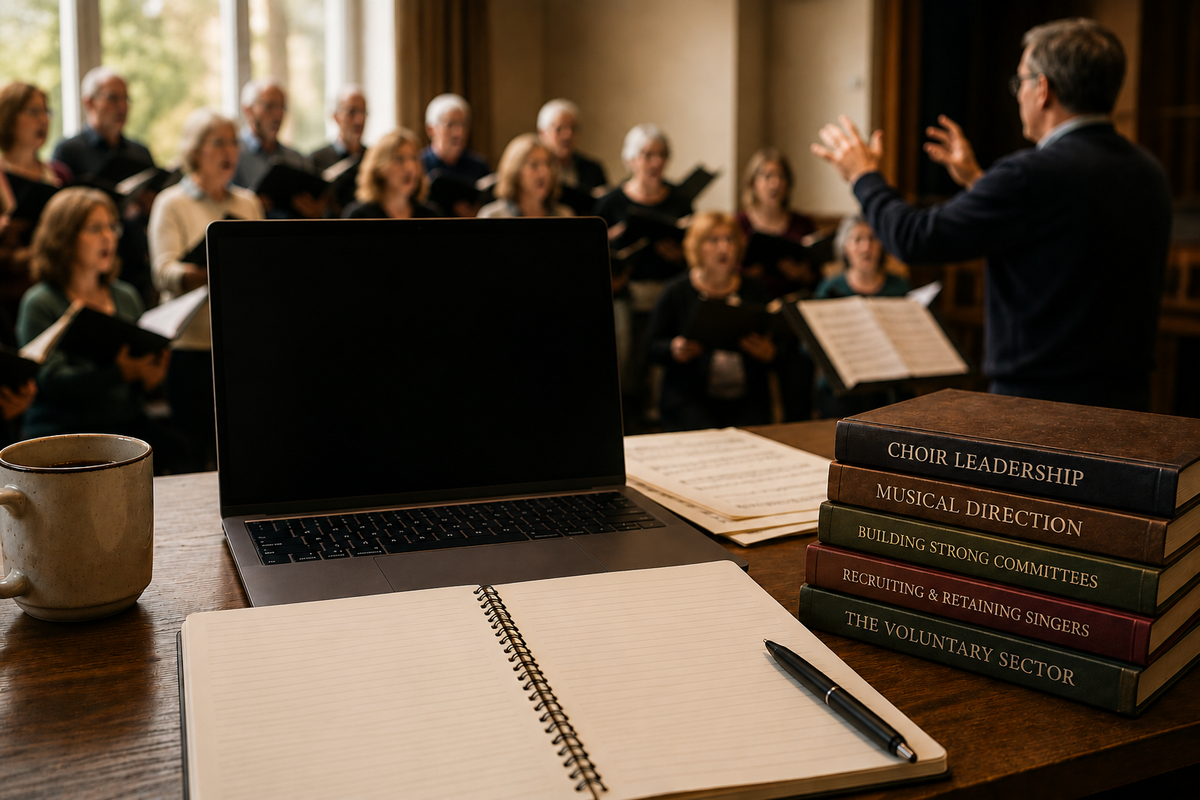
One of the questions that occasionally appears in response to Choireland articles has nothing to do with conducting, repertoire, committee structures or choir recruitment. Instead, it focuses on the tool used to create the content.
"Was this written by AI?"
The answer is straightforward.
Yes. But also no.
Like many organisations, businesses and publications, Choireland uses artificial intelligence as part of its writing process. What some readers may not realise, however, is that AI does not generate the ideas, the opinions, the experiences or the practical insights that underpin the articles you read.
Those come from people.
The articles published on Choireland are rooted in decades of real-world experience in choirs, music education, conducting, committee leadership, governance, communications, management and the wider voluntary sector. They are informed by successes, failures, difficult decisions, challenging rehearsals, festival experiences, committee meetings, recruitment campaigns and thousands of conversations with singers and choir leaders.
Artificial intelligence has not lived any of those experiences.
It has never stood in front of a choir wondering whether a competition programme is too ambitious. It has never tried to persuade a committee to adopt an attendance policy. It has never spent months recruiting tenors. It has never sat through an AGM that should have finished at 9pm but somehow reached midnight.
The experience is human.
The technology simply helps organise and communicate it.
Some readers may imagine AI as a machine producing articles entirely on its own. The reality is considerably less dramatic. Every article begins with a topic, an idea, an opinion or an experience. The structure is developed, examples are considered, arguments are refined and the final result is edited before publication. AI acts as a writing assistant rather than an author.
In many respects, this is no different from countless technological developments that have transformed creative work over the years. Conductors use notation software instead of manuscript paper. Photographers use digital editing tools. Designers use sophisticated graphics packages. Few people would suggest that these technologies diminish the expertise of the people using them.
The same principle applies here.
Expertise does not come from typing words onto a screen. Expertise comes from knowledge, judgement and experience. The value of an article lies in the quality of its ideas, the usefulness of its advice and the relevance of its insights. Whether those ideas are typed directly into a keyboard or developed with the assistance of modern tools is, ultimately, a secondary consideration.
Choireland exists for one reason: to help choirs. If an article helps a Musical Director run a better rehearsal, assists a committee in solving a governance problem or gives a choir practical ideas for attracting new members, then it has achieved its purpose.
The tool used to draft the words is far less important than the value those words provide.
The reality is that AI is not replacing experience. It is amplifying it.
And if that allows more useful articles, more practical advice and more support for choirs across Ireland, then we believe it is a tool worth using.