Stop Trying to Keep Everyone Happy
Choirs suffer enormously when decision-making becomes overly reactive.
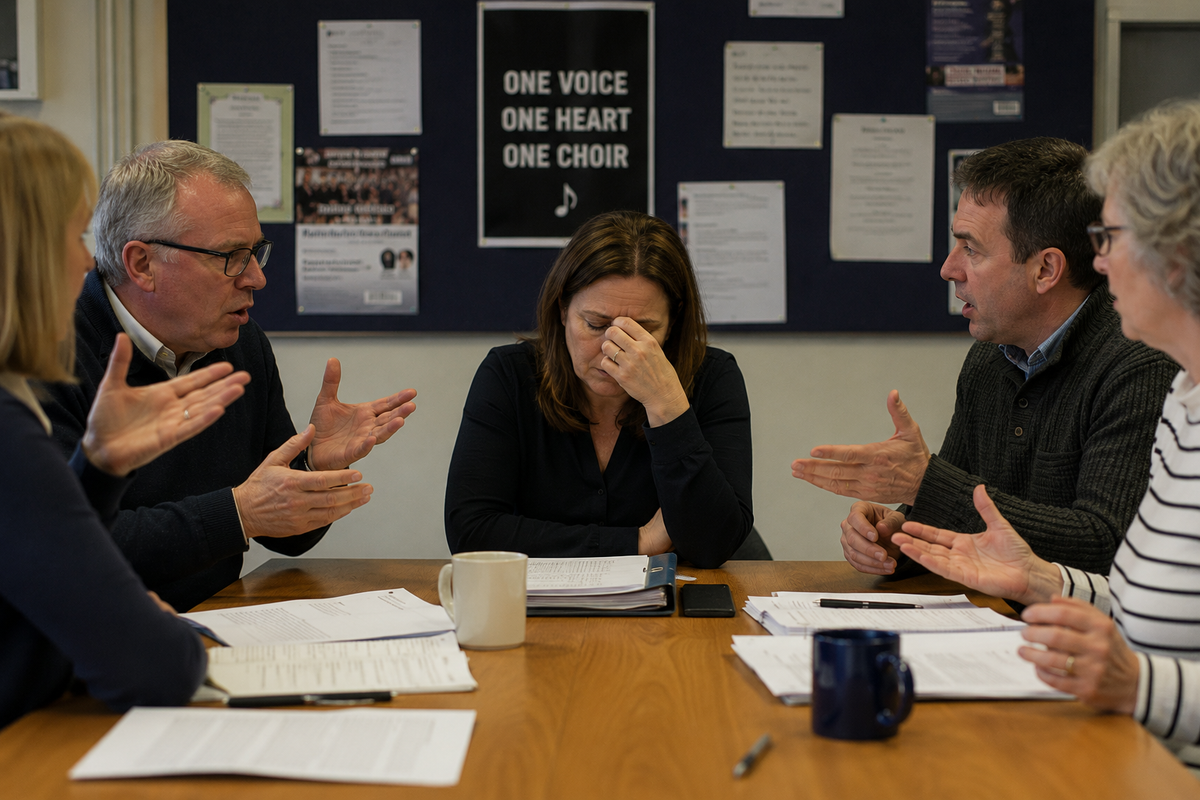
One of the fastest ways to weaken a choir is to lead it by emotional referendum.
Choir leaders often begin with the very best intentions.
They want harmony.
Not just musically.
They want members to feel valued, heard and included. They want rehearsals to be enjoyable. They want committee meetings to remain civil. They want nobody leaving in a huff over repertoire choices, seating plans or the controversial redistribution of the good biscuits.
All perfectly understandable.
And entirely capable of destroying effective leadership.
Because at some point, every choir leader discovers an uncomfortable truth:
somebody will always be unhappy.
Always.
Choose contemporary repertoire and somebody wants more Mozart.
Programme sacred music and somebody complains it feels too churchy.
Schedule an extra rehearsal and somebody mutters about work-life balance.
Do not schedule the extra rehearsal and somebody complains standards are slipping.
The complaints themselves are not the issue.
The issue begins when leadership starts treating every expression of dissatisfaction as a problem requiring emotional intervention.
“Healthy choirs are not built by making everybody equally content. They are built by making consistently good decisions.”
This is where many volunteer-led organisations quietly lose their nerve.
A single unhappy email arrives after rehearsal and suddenly an entirely reasonable decision enters emergency review. A passing corridor complaint becomes a governance discussion. One mildly aggrieved tenor somehow acquires disproportionate influence over strategic direction simply because he is willing to sigh theatrically near committee members.
None of this is leadership.
It is emotional crowd control.
Choirs suffer enormously when decision-making becomes overly reactive. Repertoire loses coherence. Standards drift. Communication becomes vague and apologetic. Leaders begin speaking in strange diplomatic half-sentences designed to offend nobody while clarifying almost nothing.
Everybody senses it.
Confidence in leadership weakens surprisingly quickly once choirs realise decisions can be reversed by sufficient grumbling.
This does not mean leaders should become dismissive or authoritarian. Listening matters enormously. Choirs are communities, not military compounds. Sensible feedback should absolutely shape decision-making.
But feedback and appeasement are not the same thing.
Strong leaders listen carefully.
Then decide clearly.
There is also a distinctly Irish version of this problem, where organisational politeness sometimes becomes almost pathological. People avoid difficult conversations for fear of awkwardness. Poor behaviour goes unchallenged because confrontation feels socially exhausting. Committees spend extraordinary energy maintaining surface pleasantness while deeper issues quietly worsen underneath.
The choir remains outwardly lovely.
Internally, everybody is exhausted.
Leadership sometimes requires mild discomfort.
That includes saying:
no.
No, we are not changing the programme because three people preferred something else.
No, the rehearsal schedule cannot revolve around every individual diary complexity.
No, not every artistic decision requires collective philosophical consultation.
Choirs do not become stronger because leaders eliminate all friction.
They become stronger because members trust leadership to make thoughtful decisions, explain them properly and remain steady when inevitable objections appear.
Because objections will appear.
They always do.
In fact, if nobody is ever unhappy with any choir decision, one of two things is probably true:
either the choir has achieved organisational sainthood, or leadership has stopped making meaningful choices altogether.
One of those is considerably more likely.