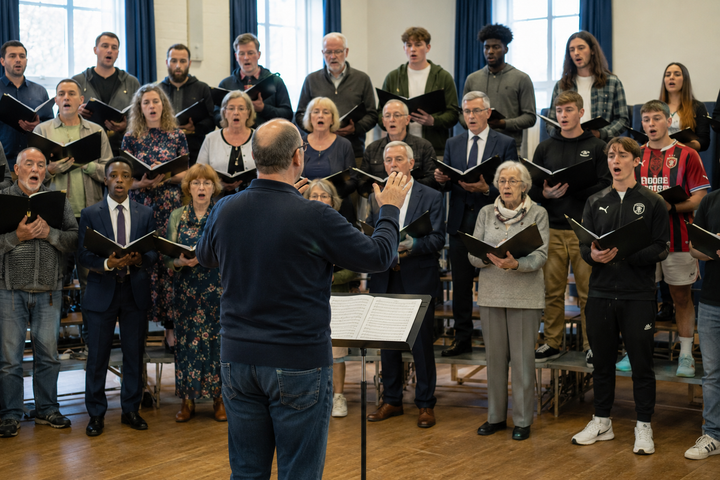
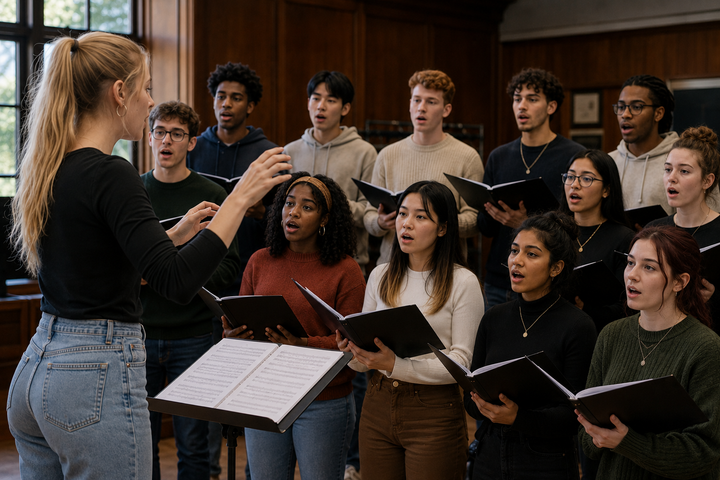
Stop Conducting Every Note
“A choir that cannot survive without constant conducting has not really learned the music.”
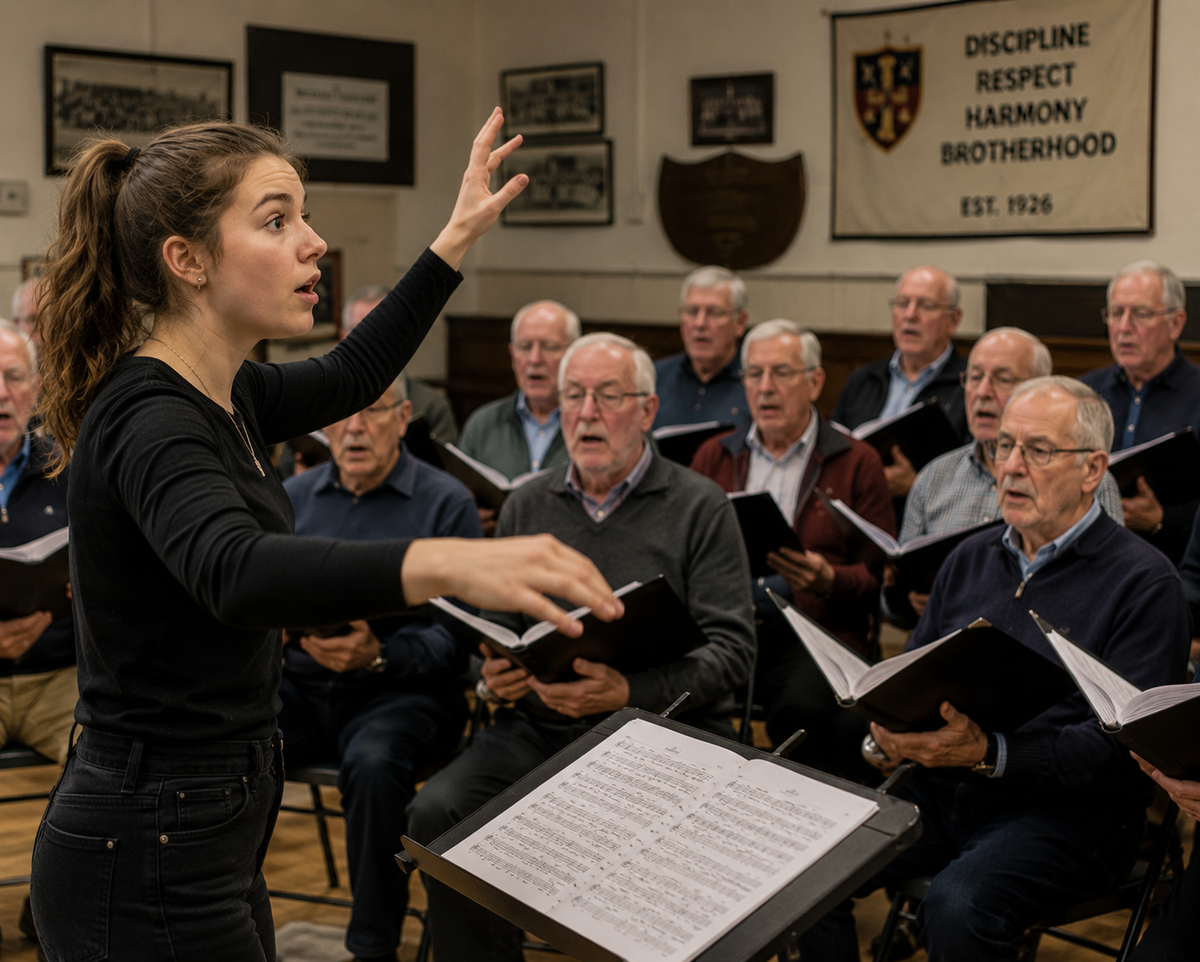
One of the clearest signs of an inexperienced conductor is not poor musicianship. It is the inability to stop moving.
Watch enough conductors and a pattern begins to emerge.
Some appear physically incapable of allowing a choir to sing without constant manual supervision. Every beat is marked. Every entry is cued. Every phrase is sculpted with increasing urgency, as though the choir might immediately wander into traffic if left unsupervised for more than two bars.
The arms never stop.
At first glance, this can look impressive.
It feels energetic.
Committed.
Musically engaged.
It is often none of those things.
More often, it is anxiety with good posture.
Many conductors over-conduct because movement creates the comforting illusion of control. If the hands are constantly active, surely something useful must be happening. The problem is that choirs quickly become dependent on this behaviour in ways conductors rarely notice.
Singers stop counting.
Why would they?
The conductor is effectively doing the musical driving for everyone.
Listening weakens too. Ensemble awareness becomes secondary when singers are trained to watch for constant instruction instead of listening across the choir. Musical independence begins to evaporate.
This is particularly damaging in amateur choirs, where confident internal counting and collective listening are often the exact skills that most need developing.
“A choir that cannot survive without constant conducting has not really learned the music.”
This does not mean conductors should become decorative ornaments at the front of the room. Good conducting matters enormously. Clear gesture, intentional cueing and intelligent physical leadership can transform an ensemble.
But conducting is communication, not choreography.
The best conductors understand that absence can be just as powerful as movement.
Sometimes the most effective thing a conductor can do is simply stop interfering.
Leave the choir alone for four bars.
Trust the pulse.
Let singers own the phrase.
The first few attempts may be ugly.
That is entirely the point.
Choirs develop resilience when they are required to carry responsibility rather than borrowing it indefinitely from the podium.
This is especially true in performance, where over-conducting often becomes visually distracting. Audiences do not need to watch a conductor physically interpret every semiquaver with the emotional intensity of somebody directing a maritime rescue operation.
Stillness can be magnetic.
Economy can look authoritative.
Excessive movement often communicates uncertainty rather than confidence, no matter how expressive it feels from the podium.
There is also a simple practical question conductors should occasionally ask themselves:
if the choir is already singing exactly what you want, why are you still conducting so aggressively?
Not every musical moment requires intervention.
Sometimes the phrase is already breathing naturally.
Sometimes the rhythm is already secure.
Sometimes the choir deserves enough trust to continue without being physically micromanaged.
Conductors often believe more gesture equals more musical leadership.
The opposite is frequently true.
The choirs that sing with the greatest confidence are often those led by conductors who understand exactly when to move and, more importantly, when not to.
Because ultimately, the goal is not to create singers who follow beautifully.
It is to create singers who listen beautifully.