How to Recruit Tenors and Basses
Few topics generate more discussion among choir committees and Musical Directors than the challenge of recruiting tenors and basses. Across Ireland and beyond, many mixed-voice choirs face the same reality: a healthy number of ......

Moving Beyond the "We're Always Looking for Men" Approach
Few topics generate more discussion among choir committees and Musical Directors than the challenge of recruiting tenors and basses. Across Ireland and beyond, many mixed-voice choirs face the same reality: a healthy number of sopranos and altos, accompanied by a much smaller group of men carrying the tenor and bass lines.
The response is often predictable.
Concert programmes, websites and social media posts frequently include phrases such as "We're always looking for men" or "Tenors and basses urgently required." While well-intentioned, this approach rarely produces the results choirs hope for. In some cases, it can even have the opposite effect.
The reason is simple. Most people do not join choirs because a choir needs them. They join because they believe they will enjoy the experience.
Imagine seeing an advertisement for a sports club, theatre group or community organisation that simply stated, "We are desperate for members." It may be honest, but it is unlikely to be particularly attractive. Potential singers want to know what they will gain from joining, not merely what the choir hopes to gain from them.
Successful recruitment begins by changing the narrative.
Instead of focusing on vacancies, focus on opportunity. Talk about the enjoyment of singing, the friendships that develop, the satisfaction of performance and the sense of achievement that comes from creating music together. Men are far more likely to respond to an invitation that highlights the benefits of participation than one that emphasises a shortage in the tenor or bass section.
This shift in language matters because many potential male singers already assume they cannot sing.
Unlike women, who often have greater opportunities to participate in singing during school and community life, many men reach adulthood with little or no choral experience. They may enjoy music immensely while remaining convinced that choir singing is for other people. Recruitment efforts should therefore reduce barriers rather than reinforce them.
One of the most effective approaches is personal invitation.
Many successful tenors and basses are sitting in audiences, workplaces, sports clubs and social circles waiting for somebody to ask them. Choirs frequently invest considerable effort in posters, advertisements and social media campaigns while overlooking the simple power of direct invitation. A personal conversation remains one of the strongest recruitment tools available.
It is also important to remember that not every potential recruit arrives knowing they are a tenor or bass.
Many men have never been voice tested and have little understanding of vocal ranges. Advertising specifically for tenors may unintentionally discourage somebody who would make an excellent tenor but does not realise it yet. Inviting men to come and try a rehearsal is often far more effective than requiring them to identify their voice type in advance.
Visibility also plays a significant role.
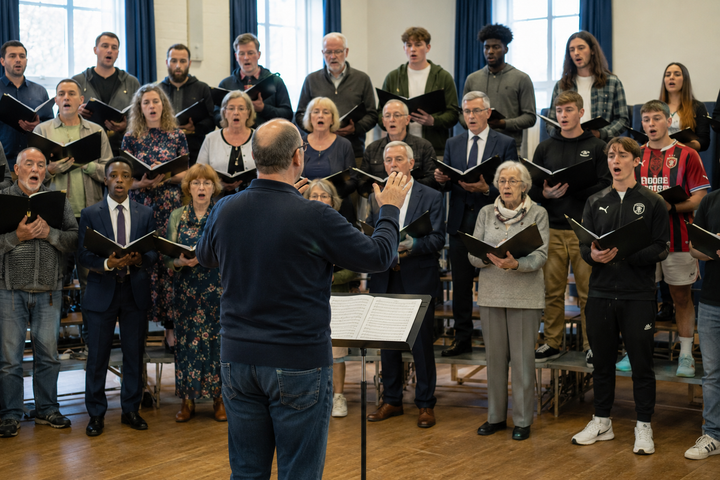
Potential male singers need to see people like themselves already participating. Choirs whose promotional material features only large groups of women may unintentionally send the message that men are unusual or peripheral members of the organisation. Photographs, videos and social media content should reflect the diversity of the choir and demonstrate that male singers are valued contributors to the ensemble.
The rehearsal experience itself is equally important.
Recruitment and retention are closely linked. A man who attends a rehearsal and feels welcomed, included and supported is far more likely to return. Section leaders and existing tenors and basses can play an invaluable role here. The first few rehearsals can be intimidating for any newcomer, particularly if they are one of only a handful of men in the room.
Choirs should also think carefully about repertoire.
This does not mean abandoning artistic ambition or selecting music solely to attract men. However, varied programming that allows all sections to feel engaged can help. Tenors and basses who spend every rehearsal doubling inner harmonies may find the experience less rewarding than those who occasionally enjoy prominent musical moments.
Patience is essential.
Building a strong tenor and bass section rarely happens overnight. The choirs with healthy male participation today are often the same choirs that have invested years in recruitment, retention and culture. Sustainable growth usually occurs gradually, one singer at a time.
Perhaps the most important lesson is that recruitment is not really about tenors and basses at all.
It is about creating a choir that people want to join.
When the rehearsal atmosphere is welcoming, the musical standards are high, the organisation is well run and members genuinely enjoy the experience, recruitment becomes significantly easier. Men, like everyone else, are attracted to organisations that are positive, purposeful and enjoyable.
The strongest recruitment message is rarely "We need tenors and basses."
It is: "Come and sing with us. You'll be glad you did."