How to Grow a Community Choir
While recruitment is certainly important, it is only one part of the picture. In fact, many choirs focus so heavily on attracting new members that they overlook the factors that determine whether those members stay.

Growth Is Not About Numbers. It Is About Creating Something People Want to Join.
When choir leaders talk about growth, the conversation often begins and ends with recruitment.
How many new members joined this season? How many enquiries were received? How many singers attended the open night?
While recruitment is certainly important, it is only one part of the picture. In fact, many choirs focus so heavily on attracting new members that they overlook the factors that determine whether those members stay. Sustainable growth is rarely achieved through recruitment campaigns alone. It is achieved by building an organisation that people enjoy being part of and are proud to recommend to others.
The first step is understanding what makes your choir distinctive.
Every successful community choir has an identity. Some are known for musical excellence. Others are known for their welcoming atmosphere, adventurous programming, community involvement or social culture. Growth becomes much easier when people can clearly understand what your choir stands for. If a potential member asks, "Why should I join this choir rather than another one?" the answer should be obvious.
This does not mean trying to appeal to everyone.
One of the most common mistakes choirs make is attempting to be all things to all people. In doing so, they often become less attractive rather than more attractive. The strongest organisations have a clear sense of purpose and attract members who share that vision.
Retention deserves just as much attention as recruitment.
Many choirs celebrate ten new members arriving in September while quietly ignoring the fact that eight existing members left during the previous season. Growth achieved through the front door can quickly disappear through the back door. Choir leaders should regularly ask themselves why members stay. The answers are often revealing. While musical standards matter, people frequently remain because of friendships, belonging, personal development and the enjoyment they experience each week.
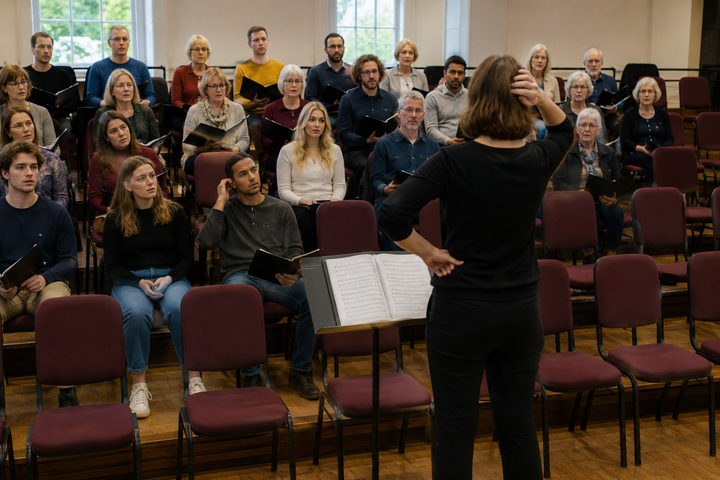
The rehearsal experience itself is perhaps the most powerful recruitment tool available.
Potential members may first discover a choir through advertising or social media, but they decide whether to stay based on what happens in the rehearsal room. A welcoming atmosphere, clear organisation, good musical leadership and a sense of progress all contribute significantly to member satisfaction. If rehearsals are enjoyable, members become ambassadors. If they are not, no amount of marketing will compensate.
Word of mouth remains extraordinarily powerful.
Most successful community choirs can trace a significant proportion of their membership to personal recommendation. Friends invite friends. Family members attend concerts and become interested. Colleagues hear positive stories and decide to visit a rehearsal. This is one reason culture matters so much. People recommend experiences they enjoy.
Concerts should also be viewed as recruitment opportunities.
Many choirs see performances primarily as artistic events. They are also showcases for potential members. Every audience contains people who may be considering joining a choir, even if they have not yet admitted it to themselves. Creating pathways for those people to learn more, make contact and attend a rehearsal can significantly improve recruitment outcomes.
Visibility within the community is equally important.
Choirs that remain hidden between concerts often struggle to grow. Community engagement, local partnerships, social media activity and participation in local events all help increase awareness. Growth becomes easier when people already know who you are. The objective is not constant self-promotion but consistent presence.
Data can play a surprisingly useful role as well.
Many choirs make decisions based on assumptions rather than evidence. Tracking attendance, monitoring membership trends, surveying members and analysing audience data can reveal patterns that might otherwise remain invisible. Understanding who joins, who leaves and why they make those decisions allows choirs to respond more effectively.
Financial accessibility should not be overlooked.
Membership fees are necessary, but they can also become barriers. Community choirs should periodically review whether their fee structures remain appropriate and consider how they support singers who may face financial difficulties. The goal is not to undervalue the choir, but to ensure that finances do not unnecessarily restrict participation.
Leadership is ultimately the deciding factor.
Growing choirs are rarely accidents. They are usually led by people who think strategically, communicate clearly and understand that membership growth is the result of many interconnected factors. They recognise that recruitment, retention, programming, culture, marketing and leadership all influence one another.
Perhaps the most important lesson is that growth should never become an objective in isolation.
A choir that focuses solely on increasing numbers can easily lose sight of its purpose. Growth is valuable when it strengthens the organisation, enhances the musical experience and expands the choir's impact within its community. Larger is not automatically better.
Better is better.
The community choirs that thrive over the long term are not necessarily those with the biggest membership lists. They are the choirs that create an environment where people feel welcomed, valued, challenged and inspired.
When that happens, growth tends to take care of itself.