Every Choir Has These People
Every choir has one. Usually an alto. Occasionally terrifyingly accurate. They can identify a drifting pitch centre before the accompanist has even registered danger.
Spend enough years in rehearsal rooms and you begin to realise something extraordinary: no matter where the choir is based, the same characters somehow keep appearing.
There should probably be a formal scientific study conducted into this at some stage.
Because whether the choir rehearses in a Dublin parish hall, a Belfast arts centre, a Cork school gymnasium or a freezing community centre somewhere outside Mullingar, the same personalities emerge with astonishing consistency.
Nobody auditions for these roles.
They simply evolve naturally over time.
Take, for example, The Human Tuning Fork.
Every choir has one. Usually an alto. Occasionally terrifyingly accurate. They can identify a drifting pitch centre before the accompanist has even registered danger. During particularly unstable rehearsals, their facial expressions become increasingly haunted, as though they alone can hear civilisation collapsing in real time.
Then there is The Late Tenor.
The Late Tenor never actually misses rehearsals. That would almost be easier to manage. Instead, he arrives twelve minutes late carrying coffee, apologies and the vague atmosphere of somebody who has sprinted through three different life crises to get there.
The conductor attempts mild disapproval.
Nobody listens.
Because choirs are simply grateful to possess a tenor.
“Every choir claims not to have enough tenors. Even choirs with several tenors believe this.”
Then we encounter The Rehearsal Lawyer.
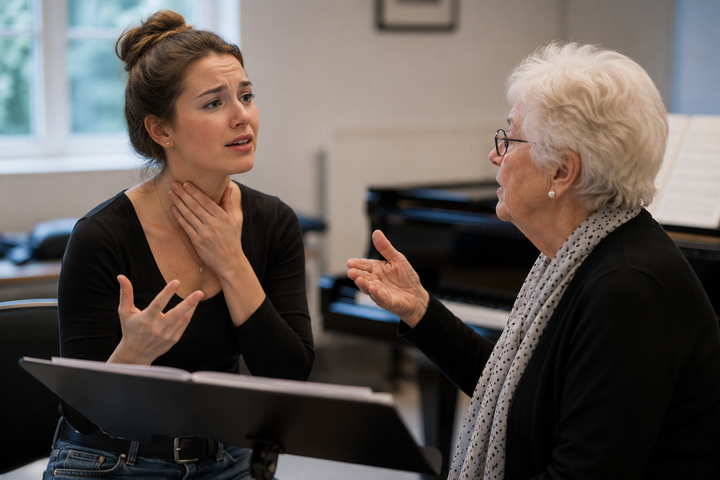
This singer approaches every musical instruction as though preparing legal cross-examination for the High Court.
“Sorry now,” they begin, which is never a promising phrase. “When you said brighter there, did you mean emotionally brighter or vowel brighter?”
Five minutes disappear instantly.
The conductor briefly considers walking into traffic.
Equally recognisable is The Folder Archaeologist. This individual possesses music dating back to economic periods historians no longer fully understand. Entire extinct repertoire cycles emerge from their folder unexpectedly during rehearsals.
Nobody knows why they still carry Christmas music in May.
Least of all them.
The Dynamic Extremist also deserves mention. Their interpretative range exists almost entirely between inaudible and Verdi Requiem. Requests for mezzo forte are received politely but ignored completely.
The choir spends years attempting to regulate this.
It cannot be done.
Then there is The Whisper Singer.
A mysterious presence within the ensemble. Visually committed. Emotionally invested. Technically impossible to hear under any known acoustic conditions. Conductors spend entire seasons wondering whether sound is actually emerging.
Still, removing them from the choir would emotionally devastate everyone, so the situation continues indefinitely.
The Retired Teacher remains one of the great stabilising forces in Irish choirs. Organisationally indestructible, they quietly run approximately seventy percent of the ensemble through sheer competence and alarming access to folders.
Long after civilisation collapses, retired teachers will still be arranging seating plans somewhere.
Perhaps the most fascinating figure, however, is The Person Who Always Brings Everyone Back Together.
Every choir has one.
Not necessarily the loudest singer. Not the committee chairperson. Often not even somebody particularly obvious.
But when rehearsals feel flat, tensions rise or morale begins drifting downward, this person somehow resets the atmosphere simply by being present. They laugh easily. They welcome nervous new members instinctively. They create steadiness around themselves without appearing to try.
Choirs survive because of people like this far more than they realise.
That may be the strange beauty of choirs generally. Beneath all the tuning concerns, missing folders, sectional rehearsals and panicked concert weeks, choirs are ultimately collections of human personalities trying imperfectly to build something together.
And somehow, against all reasonable odds, it usually works.
Even with the late tenor.