Choir Warm-Up Exercises for SATB Choirs
The best warm-ups do far more than prepare voices for singing. They establish posture, breathing, listening, tuning, vowel formation, ensemble awareness and rehearsal focus.
Why the First Ten Minutes Matter More Than Most Conductors Think
Warm-ups are among the most misunderstood parts of a choir rehearsal.
For some choirs, they have become little more than tradition. The same exercises are repeated week after week because they have always been done that way. For others, warm-ups are treated as a vocal equivalent of stretching before exercise, something to be endured before the "real" rehearsal begins.
In reality, a well-designed warm-up is one of the most valuable teaching opportunities available to a conductor.
The best warm-ups do far more than prepare voices for singing. They establish posture, breathing, listening, tuning, vowel formation, ensemble awareness and rehearsal focus. A conductor who uses warm-ups intelligently can often solve problems before they appear later in the rehearsal.
The first objective should always be physical readiness.
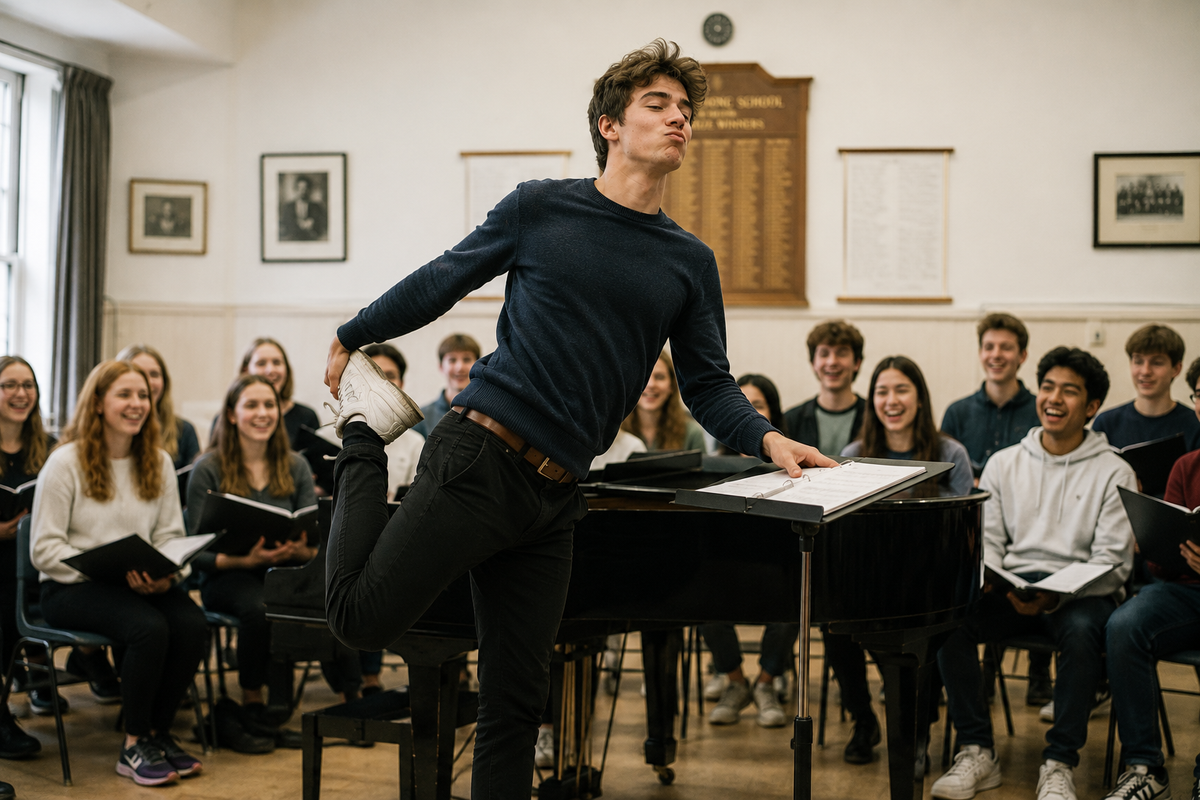
Most singers arrive from work, school or home carrying the physical tension of the day. Shoulders are raised, breathing is shallow and concentration is often elsewhere. Simple stretching and posture exercises can help singers reset both physically and mentally. The goal is not athletic flexibility but efficient alignment. A choir that stands comfortably and breathes freely will generally sing more effectively.
Breathing exercises should follow naturally.
Many conductors focus on inhalation alone, but good breath management depends equally on controlled exhalation. Exercises involving sustained hissing sounds, gentle pulses of air or controlled breath release help singers engage the muscles required for supported singing. They also encourage collective focus, particularly when the entire choir is breathing and releasing together.
Once breathing has been established, vocalisation can begin.
Gentle humming remains one of the most useful exercises available to conductors. It encourages resonance without excessive vocal effort and helps singers become aware of vibrations within the face and head. Humming can gradually develop into vowel-based exercises that encourage freedom of tone while avoiding unnecessary tension.
Vowel work is particularly valuable for SATB choirs.
Many ensemble issues that appear to be tuning problems are actually vowel problems. When sections sing different vowel shapes, blend becomes difficult and intonation often suffers. Warm-ups provide an ideal opportunity to reinforce consistent vowel formation across the ensemble. Simple five-note patterns using vowels such as "ah", "eh", "ee", "oh" and "oo" can produce significant improvements over time.
For mixed choirs, range should be approached carefully.
A common mistake is attempting to demonstrate vocal extremes too early in the rehearsal. Warm-ups should gradually expand range rather than immediately demanding it. Sopranos should not be expected to sing their highest notes within the first few minutes, nor should basses be driven unnecessarily low before the voice is fully awake.
As the warm-up progresses, listening should become increasingly important.
Many conductors focus exclusively on vocal production while neglecting ensemble awareness. Yet choral singing is fundamentally a listening activity. Exercises involving held chords, simple harmonies and moving intervals encourage singers to listen across sections rather than concentrating solely on their own part. These moments help establish the collective awareness that successful ensemble singing requires.
One particularly effective SATB exercise involves building chords from the bottom upwards. Basses begin with a single note, followed by tenors, altos and finally sopranos. As each section enters, singers are encouraged to listen carefully to balance, tuning and blend. The exercise develops harmonic awareness while reinforcing the idea that every section contributes to the overall sound.
Rhythm can also be incorporated into warm-ups.
Conductors often separate vocal technique from rhythmic preparation when, in reality, the two are closely connected. Simple rhythmic exercises involving clapping, speaking or body percussion help develop precision while energising the rehearsal room. They are particularly useful when preparing repertoire containing complex rhythmic passages.
Importantly, warm-ups should reflect the needs of the choir.
There is little value in spending ten minutes on agility exercises if the repertoire demands sustained legato singing. Similarly, a choir struggling with tuning may benefit more from harmonic listening exercises than elaborate vocal gymnastics. The most effective warm-ups are tailored to the musical challenges that lie ahead.
Variety is equally important.
Singers quickly disengage when the same sequence is repeated without thought every week. While certain core exercises may remain valuable, occasional variation helps maintain concentration and keeps warm-ups feeling purposeful rather than routine.
Ultimately, warm-ups should never be viewed as a separate part of the rehearsal.
They are the first rehearsal of the evening.
Every exercise should have a clear purpose. Every minute should contribute towards the music that follows. When approached in this way, warm-ups become far more than vocal preparation. They become one of the most powerful teaching tools available to a conductor.
The choirs that sing most successfully are often those whose rehearsals begin with intention rather than habit.