Why Choirs Matter More Than Ever
There is something slightly miraculous about a choir rehearsal when you stop and think about it for too long.
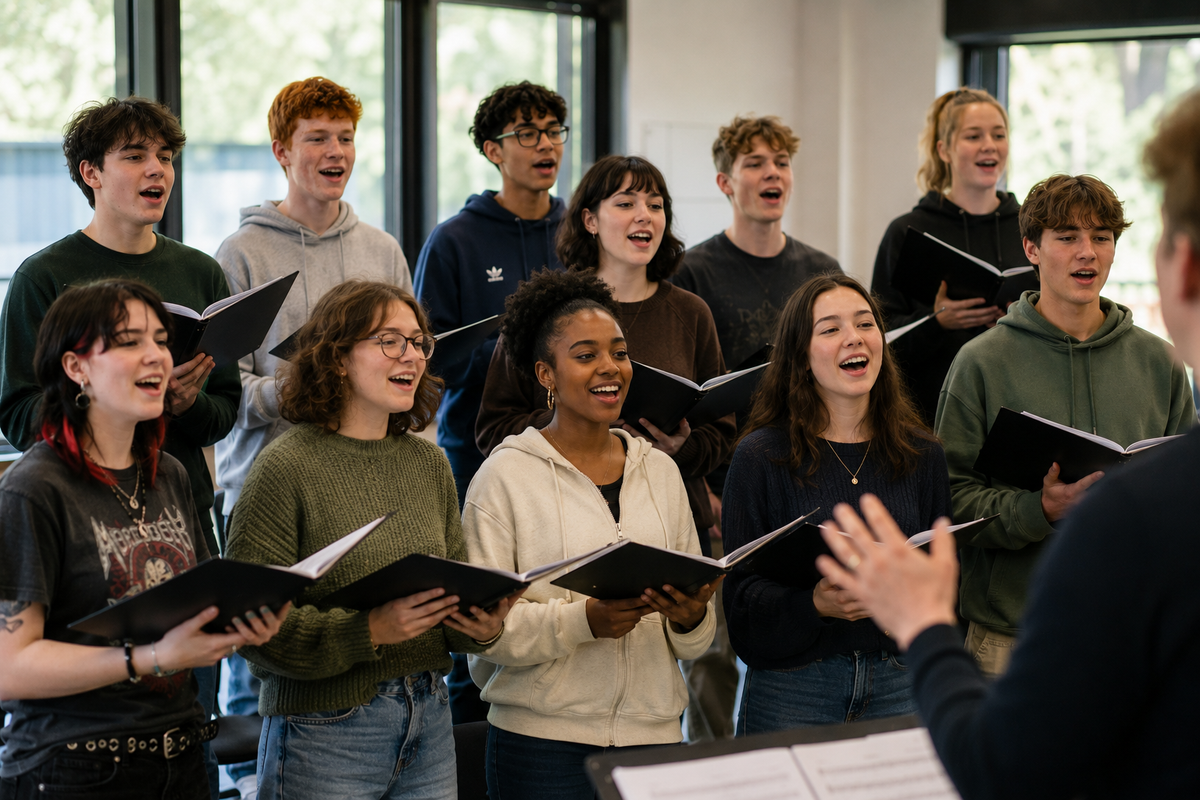
In a world that grows more disconnected by the year, choirs continue to offer something quietly radical: people gathering in a room, listening to one another, breathing together and creating something that cannot exist alone.
There is something slightly miraculous about a choir rehearsal when you stop and think about it for too long.
On a wet Tuesday evening in November, people leave warm houses and busy lives to stand beside near-strangers in parish halls, schools, churches and community centres across Ireland. They arrive carrying office stress, grief, tiredness, shopping bags, bad news, blood pressure tablets, relationship worries and half-finished emails. Some have spent the day speaking constantly. Others have barely spoken to another person at all.
Then, somehow, they sing.
Not professionally. Not perfectly. Often not even particularly confidently at first.
But they come anyway.
In an era increasingly defined by isolation, choirs continue to do something modern life struggles to provide elsewhere: they create belonging without requiring explanation.
That matters more than we sometimes admit.
“Choirs ask people to participate rather than merely consume.”
Modern life is full of passive experiences. We scroll. We stream. We watch. We absorb. Even many social interactions now happen through screens and notifications rather than physical presence. Entire days can pass in silence interrupted only by keyboards and traffic.
Choirs resist that passivity completely.
You cannot fake your presence in a rehearsal room. Your voice matters too much. Your breathing matters. Your listening matters. Even standing silently inside a chord requires participation.
There are few remaining places in adult life where strangers are expected to collaborate toward something difficult without financial reward or personal gain. Choirs continue to ask that of people every week.
And remarkably, people continue saying yes.
Part of the power of choirs lies in ritual. Rehearsals happen predictably. The chairs appear. The music folders emerge. Somebody apologises for being late while still holding a travel mug. The same warm-up exercises return. The same jokes survive for years longer than they should.
These routines can seem small from the outside.
They are not small.
For many singers, rehearsal night becomes one of the emotional anchors of the week. Not because every rehearsal is transcendent, but because continuity itself has become increasingly rare.
The older one gets, the more unusual regular community begins to feel.
Choirs quietly provide it anyway.
This becomes especially visible in Irish choirs, where community singing still carries traces of something older and deeper. Even modern chamber choirs often contain echoes of traditions rooted in parish life, local identity and collective memory. The social fabric around choirs frequently matters just as much as the repertoire itself.
People join choirs for musical reasons.
They stay for human ones.
“Very few singers remember every rehearsal. Most remember how the choir made them feel.”
Conductors understand this instinctively, even if they do not always say it aloud. Behind every performance sits an invisible emotional ecosystem made up of friendships, tensions, loyalties, confidence crises and shared experiences accumulated over years.
The music is inseparable from the people creating it.
This is partly why choirs can feel so emotionally fragile. When a choir loses momentum, it is rarely just attendance numbers declining. Something deeper begins slipping away: shared identity, collective energy, a sense of home.
Conversely, when a choir is thriving, the atmosphere becomes immediately recognisable the moment you enter the room. People laugh more easily. New singers feel welcomed quickly. Rehearsals feel purposeful rather than dutiful.
The sound changes too.
Happy choirs almost always sing better.
There is also something profoundly democratic about choral singing at its best. Choirs regularly contain people who would never otherwise meet outside the rehearsal room. Different generations stand beside one another. Different professions, backgrounds and personalities negotiate the same phrase endings and vowel shapes together.
For one evening each week, hierarchy softens slightly.
Everybody breathes together.
That collective breathing may be one of the most important things choirs offer modern life. Not metaphorically. Literally.
In a culture increasingly shaped by distraction, speed and individual performance, choirs force people to slow down enough to listen carefully to something outside themselves.
That is not old-fashioned.
If anything, it feels increasingly radical.
Perhaps that is why choirs continue to matter so deeply, even now.
Or perhaps it is simpler than that.
Perhaps people are just lonely.
And perhaps singing together helps.